

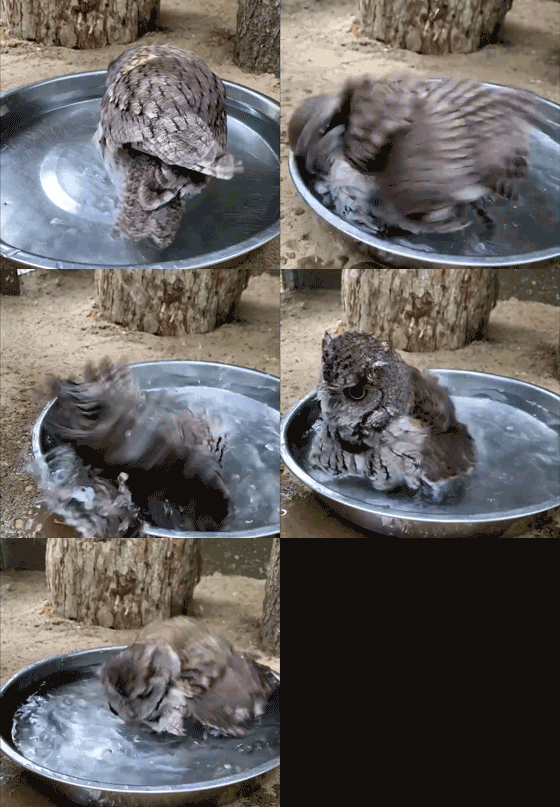
Owlfredo is a rescue and ambassador screech owl at the Stone Zoo in Stoneham, MA. She’s cleaning right up and getting ready to meet her public in time for an owl appreciation outreach. It’s hard work being a spokesowl, but she’s up for the challenge.
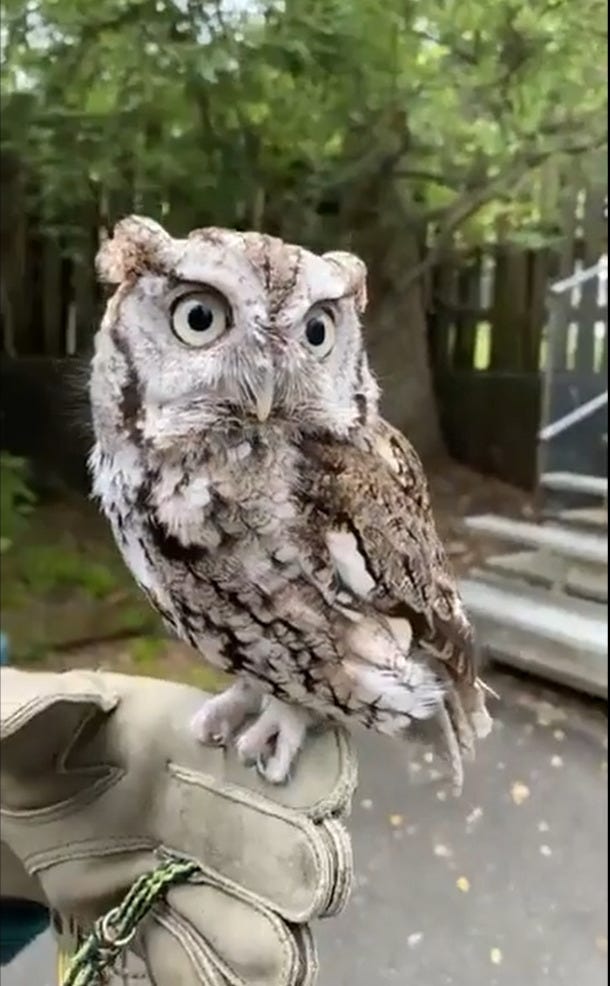
Owlfredo came to the zoo after a tree company disturbed her nest, not realizing that the dead tree they were trimming was hosting a nesting hollow. She was still an egg at the time. Unable to find her mother or a foster owl, she and her sister owl were hatched and hand-raised by human caregivers. Typically, hand-raised chicks can’t be habituated for life back in the wild, since they imprint on their human caregivers and even think of themselves as little mini humans (or their caregivers as giant screech owls). She’s been at the zoo for over seven years now, enjoying her favorite meals of crickets, roaches and worms and receiving high quality medical care. One of her favorite activities is watching frogs and chatting at them.
She is glove trained and can easily be taken outdoors for exhibits. Look how tiny and well-behaved she is!
To learn more about Eastern screech owls, check out this post from last year.

But why do birds love bathing so much? Perhaps the most obvious reason is that it’s cooling and hydrating. Birds usually take a few gulps of water when splashing about in a bird bath, and lacking sweat glands, they need to rely on a sprinkle of water to help with evaporative cooling. Water also helps the cleaning process. While birds do replace worn feathers, it’s not often enough for them to neglect regular care. Those plumes need to be in good working order for flight, insulation and to withstand the elements. Bathing removes dirt, bacteria and parasites.
With temperatures soaring in much of the Northern Hemisphere, your feathered friends will truly appreciate a bird bath with fresh, regularly-changed water. Basins should be tapered, if possible, allowing for a range of bird sizes and giving them the option to stand or dive for full-body coverage. Birds tend to prefer textured surfaces, so add a few pebbles or look for baths that have a texture baked in. If you want to go fancier, you’ll likely attract more birds with a fountain so the birds can hear and zero in on the water feature. Placing the bath next to shrubs or plants also is more appealing to birds, giving them a place to perch to watch before entering the bath, for preening and grooming those feathers post-bath, and a place to escape if needed.
Experts recommend changing bird-bath water every few days to keep it fresh and clean, and to scrub the bath as required to eliminate algae. Positioning your bird bath in the shade helps keep the water cool and discourages algae from growing. Certainly, current events have illustrated how pools in full sun fare with algae growth.
The source for today’s gif is here, credited to Educator Averi.
Brandywine Conservancy: "Why Birds Bathe" by Melissa Reckner, 8/11/20
YouTube, Zoo New England: Zoo to You: Happy ‘Bird-day’ Owlfredo
From "The Hobbit":
" 'You must go on and find out all about that light, and what it is for, and if all is perfectly safe and canny,' said Thorin to the hobbit. 'Now scuttle off, and come back quick, if all is well. If not, come back if you can! It you can’t, hoot twice like a barn-owl and once like a screech-owl, and we will do what we can.'
Off Bilbo had to go, before he could explain that he could not hoot even once like any kind of owl any more than fly like a bat".
TOO CUUUTE!