

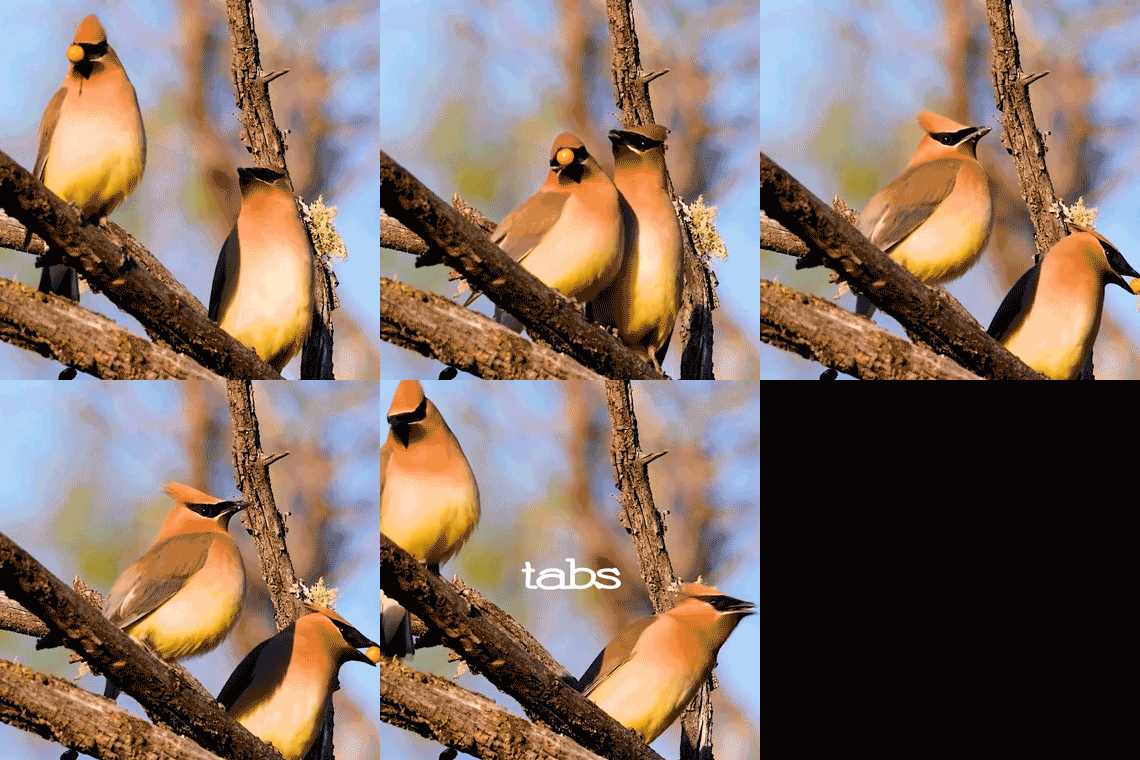
Today’s gif comes from some video taken by Navarre Marshall, a bird enthusiast I greatly admire for his ever-growing knowledge and library of bird songs. As well as his recordings taken around the world, he’s a great photographer. Today, we see some footage he’s shared of cedar waxwings.
What is this pair doing, though, passing that piece of fruit back and forth? Well, prize-sharing is one way courting cedar waxwings strengthen their bonds. One bird, usually the male, will find a berry, other small piece of fruit, flower petal or insect and will offer it to a potential mate. The gifter will approach his target, hopping closer and sometimes touching beaks. This “courtship dance” (also called “courtship hopping”) is successful if the recipient takes the gift, passing it back. The two will hop away and back again as the dance continues, turning their heads away and then towards each other. Sometimes one bird will “fake out” the other one, not passing the prize back at first proffer—little flirt, playing hard to get! Usually the couple will pass it between them a few times before the gift recipient eats the prize.
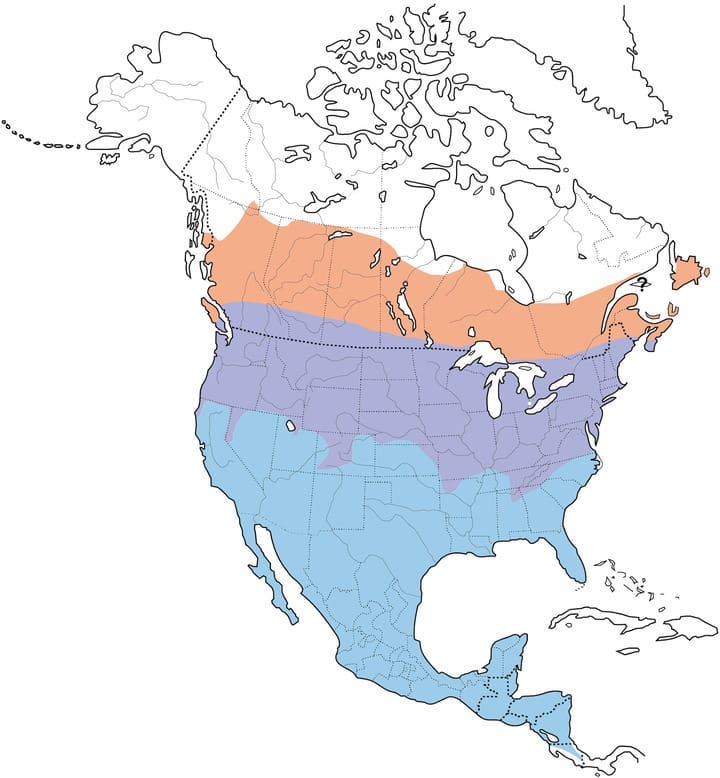
Waxwings (from the Bombycillidae family) get their common name thanks to brightly-colored wingtips, making them look as if they’ve been dipped in sealing wax. Cedar waxwings can be found in North and Central America, breeding in the summer in the woods of southern Canada and wintering in southeastern US. Breeding and wintering regions can shift from year to year, depending on food supplies.
Cedar waxwings are medium-sized passerine birds, about 6 or 7 inches long with a wingspan of roughly 9.5 inches. They are social birds, flocking in groups year round. They group in open woodlands and areas with fruiting trees and orchards. The availability of fruiting trees and shrubs influence their breeding habits, and they prefer habitats where fruit can be found at the edges of regions of higher cover, such as forest edges or suburban yards with fruiting bushes or any other wooded or semi-open area where berries are abundant. They are often heard before they are seen, flocking in trees and bushes or along rivers. When large groups fly together, they move with the parting and rejoining movements that are reminiscent of the murmurations of European starlings.
The cedar waxwing loves berries. Their efficient sugar-processing digestive system allows them to subsist on fruit all year, a diet that would be fatal to most other passerines. But they also eat flowers and insects. Their berry diet can impact their plumage: in the 1960’s some birds appeared with orange instead of yellow tail tips, the orange color the result of red pigment ingested from an introduced species of honeysuckle.
Female cedar waxwings are the primary nest builders in the relationship. She’ll take up 2500 trips to gather materials and weave the cup-shaped nest. These are loosely woven twigs with a soft inner lining that are placed in tree branches, a process that takes the builder five or six days tom complete. Sometimes, a cedar waxwing will steal materials from another species’ nest to cut down on all those trips. The female will lay five or six eggs and will incubate them for 11 to 13 days. Both parents feed the chicks, meals that consist largely of insects for the first few days after hatching and then mixing in more berries. Fledglings will leave the nest about two weeks after hatching. Mating pairs will have one or two broods per year.
The source for today’s gif is here.
Cornell Labs All About Birds: Cedar Waxwing
Berry efficient are these waxwings and berry productive too.
They are the prettiest little birds! I love seeing them out and about.