

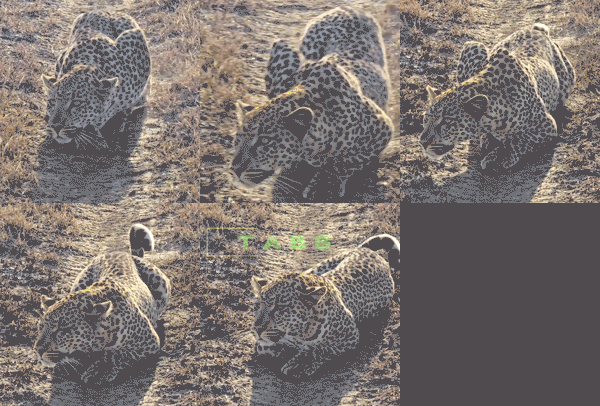
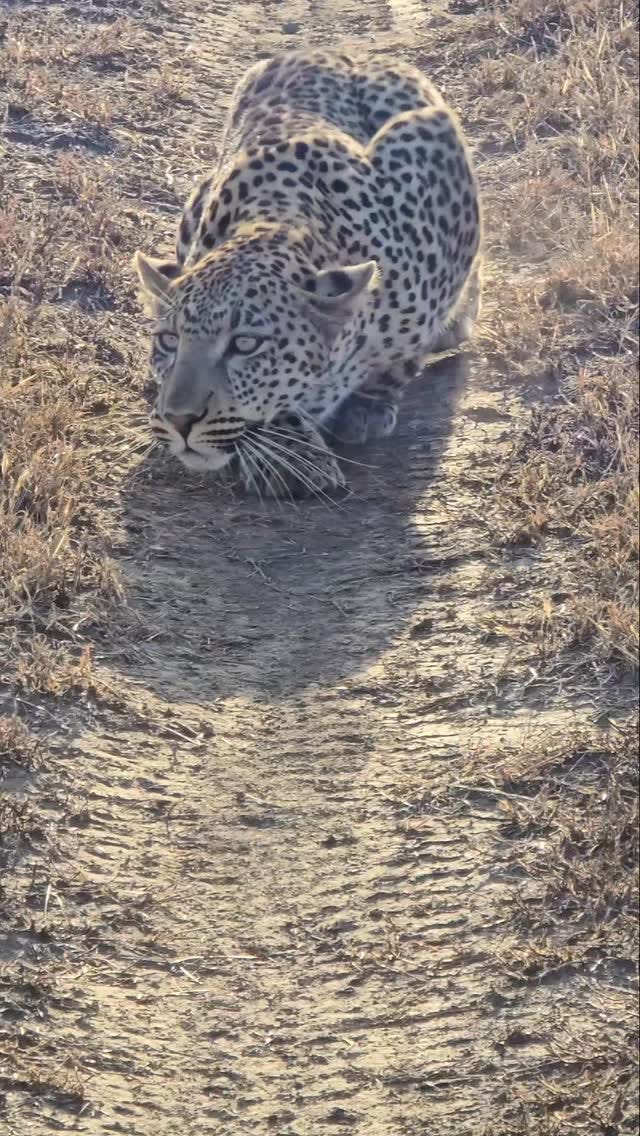
Getting nice and low is a good way to sneak up on prey. Your typical house kitty knows this, as do the more apex predatory cats. The leopard in today’s gif displays the technique perfectly, although one gets the sense that in the end he gave up on this particular stalking, perhaps having been discovered this time around.
Leopards hunt by either ambushing or stalking their prey. They will first try to get as close as possible to their target, relying on stealth and taking advantage of natural cover such as grass or scrub-brush, or even jumping from trees. They will then make a brief and explosive charge to pounce on their prey. While they can reach initial bursts of speed of up to 37 miles-per-hour, their hunting success largely relies on surprise. They do not have the ability to chase their quarry over distance and will abandon the hunt if the intended target gets away.
A leopard’s hunting success rate is typically fairly low. Only about one in five attempts ends with a kill. They will fell captured prey by quickly and decisively biting them in the neck, and will even hunt animals up to three to four times their own weight. To guard against theft from other predators, leopards frequently haul their prizes into trees, making them the only cat that has evolved this strategy. They can lift a carcass up to 40 feet high, even for kills that are 140% of their own weight. In this way, they will feed on their catch for up to six days, although lions have been known to climb into a tree to steal the meal before the leopard has finished. An adult leopard eats 4.5 to 11 pounds of meat a day, hunting about every three days. The exception is a mother raising cubs, who will hunt every other day to keep her and her babies fed.
Leopards have the most varied diet of any cat species, eating almost any protein in any form, including feeding on carrion. Dictated by opportunity, they might choose impala or other hoofed animals, monkeys, small to medium mammals, fish, crabs, reptiles, birds or even beetles. They will hunt other carnivores too, such as wild dogs, cheetahs, jackals and lion cubs. Most of their hunting occurs at night, although late afternoon and early morning are not uncommon. They may wait nearly motionless under cover for several hours before deciding the moment is right to charge. Or perhaps like today’s subject, they might creep up to get close enough for that big pounce.
Today’s video was filmed by Sammy Goasalves for the touring company Extreme Expedition. Goasalves has collected a great many terrific photographic captures living and working in Tanzania. You can check out his Facebook page at the link below.
Today’s gif source is here.
Siyabona Africa: Leopards, Kruger National Park Wildlife Facts
PBS: "Big Cats 24/7: Fun Facts About Leopards" by Ashlee Sierra, 8/27/25
The preying leopard models an actor's concentration, a dancer's grace, in motion so lovely! Good, good morning!
That was a fun read Martini thank you :o)
Have a link to Looking for my Leopard song by Rathergood:
https://www.youtube.com/watch?v=5es5MQX0VVA