

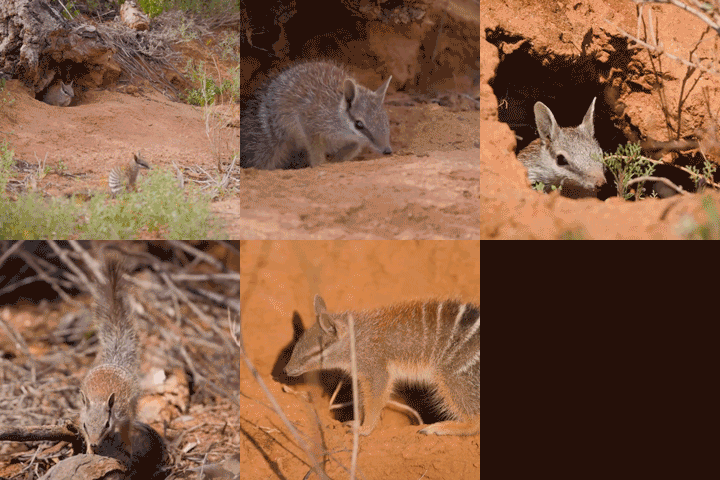
Today’s featured marsupials are numbats, also called banded anteaters. Aren’t they sweet?! Those long tongues are certainly a surprise, and also provide a hint to this animal’s diet. Yes, you guessed it—numbats are insectivores. But despite their common name, they don’t eat many ants. Their favorite meal is termites; lots and lots of termites. An adult eats about 20,000 termites every day.
Numbats belong to the taxonomic order Dasyuromorphia, which includes most of Australia’s carnivorous marsupials. They are the only remaining member of the Myrmecobiidae family. They are not closely related to other extant marsupials, their ancestors diverging from other marsupials somewhere between 32 and 42 million years ago.
Numbats are diurnal, the only marsupial fully active during the day (kangaroos and wallabies, for example, are crepuscular). Termites, as it happens, are also most active during daylight hours, which works out well for a hungry numbat. A numbat will spend its day hunting for its favorite meal, digging at loose earth with its front claws and capturing insects with its sticky tongue. Because termites have a high water content, the numbat gets what water it needs primarily from its food, enabling it to live in the dry Australian habitats where it is found.
At night, the numbat will retire to its nest. Nests may be logs, tree hollows or burrows, and the numbat will line it with soft plant material such as grass, leaves, flowers and shredded bark. It will block the entrance to the nest with it’s rump, which is covered in a thick hide. This prevents entry from predators or other intruders.
Numbats grow to about 14 to 18 inches long, with a distinctive bushy tail about the same length as the body. Females weigh on average about 16.75 ounces, while males are typically a bit larger, weighing on average about 21 ounces. Their pointed muzzles are fitted with a sensitive nose that they use to locate their prey. Their long, narrow tongue is coated with sticky saliva, and they have a ridged palate that helps them scrape insects off the tongue so that they can swallow them. Unlike other long-tongued, insect-eating animals (myrmecophages) that have evolved to be larger with more powerful digging forelimbs, the numbat is obliged to hunt during daylight hours when burrowing termites are closer to the surface, more active and easier to reach. However, daylight exposure does put the numbat at greater risk for predation. Their visual acuity is the best of any marsupial, a likely adaptation for their daylight foraging, and is a heightened sense that aids them in detecting danger.
The numbat is a solitary animal, staking out territory of about a square half-mile and defending it from others of the same sex. It will select its domain early in life and will from then on usually stay in the same region and defend it for the remainder of its life. Male and female territories overlap, which is useful for mating, although during mating season a male may venture outside of his home territory to find a mate. Breeding occurs in late austral summer, producing one litter a year (a second is possible if the first litter is lost). Gestation is 15 days, resulting in a litter of four young ones. Unlike most marsupials, numbats don’t have pouches for their young, but instead a mother’s four teats are protected by a patch of crimped hair and by the swelling of the abdomen and thighs during lactation. The small (about 3/4 of a inch) newborn babies crawl immediately to one of the teats and will remain attached for four or five months. Juveniles are kept in the nest or carried on the mother’s back after weaning until becoming fully independent by the end of spring.
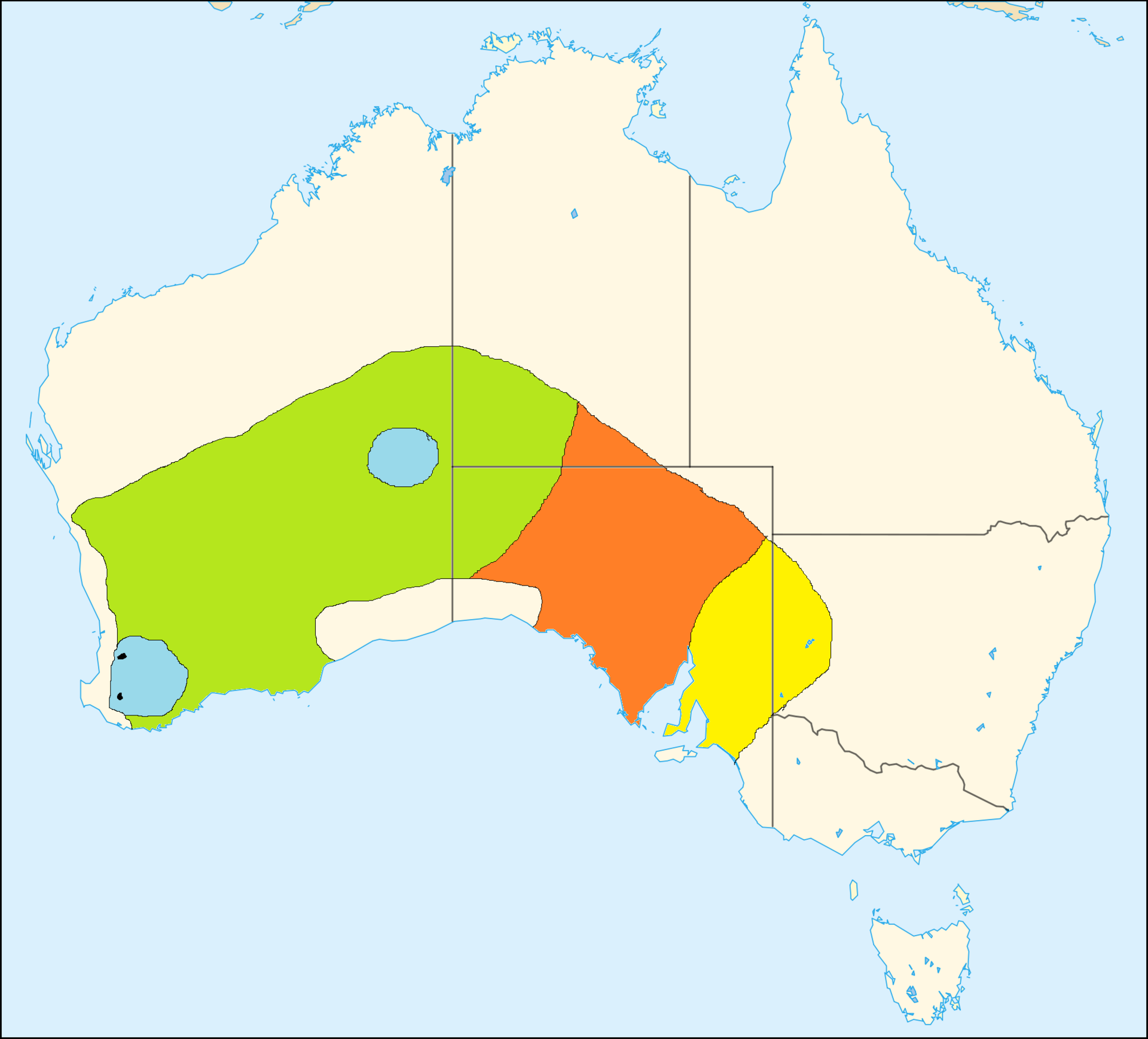
Once found throughout central to southwest Australia, the numbat’s population has sharply declined since European settlement. They are currently listed as an endangered species by the IUCN and by the EPBC Act, Australia’s legal framework for protected species. Their remaining range in Western Australia consists of eucalyptus forest, although historically they were also present in woodlands, grasslands and sand dunes. It was estimated that only about 300 numbats remained in the wild by the 1970’s, their extinction throughout most of their historical range due to largely the introduced red fox and by predation by feral cats, and also due to habitat destruction. Protection and re-population efforts active since the 1980’s have resulted in a population of about 2000 today, a result of captive breeding and reintroduction to fenced-in, protected refuges dotted within their former range.
The Perth Zoo has been an important partner in the numbat re-population program, releasing 325 numbats back into the wild. This link to a short video highlights their efforts, and features one of their adorable breeding mamas.
Today’s gif source video is taken from the Australian Wildlife Conservancy, showing some wild-born juveniles exploring outside their den in the Mallee Cliffs national park, one of the places where wild numbats have been re-introduced. The sighting is a big win for conservationists, proving that the species is breeding in favorable conditions and becoming more established. The little ones are thought to be the great-grandchildren of numbats that were re-introduced to the national park in 2020. While the plight of numbats is still perilous, there are some reasons to be hopeful that the species will persist under guarded care.
"𝘕𝘰𝘵 a Wombat, I eat 𝘣𝘶𝘨𝘴. They eat 𝘨𝘳𝘢𝘴𝘴!"
There's "334 extant marsupial species" ~70% live in Australia... Wombats famous and common, Numbats endangered and kinda obscure. Some creatures get the elevator, others get the shaft.
This learnin' business, never ends around here!
Cute as heck!