

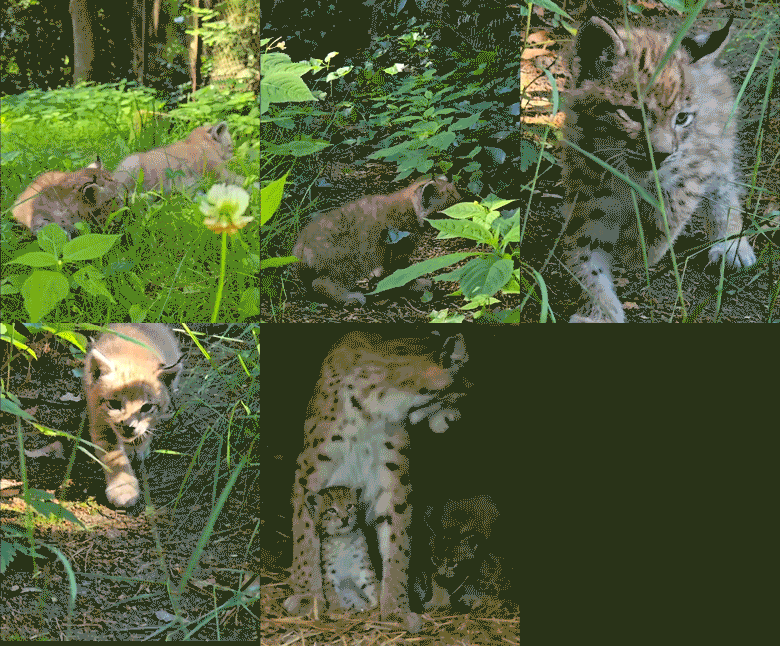
The four lynx cubs at the Lüneburg Heath Wildlife Park (Wildpark Lüneburger Heide) in Germany are over five weeks old now, and they are getting brave enough to venture forth on their own. But still, it’s nice to come back and snuggle with mama Lucy when the explorations are done.
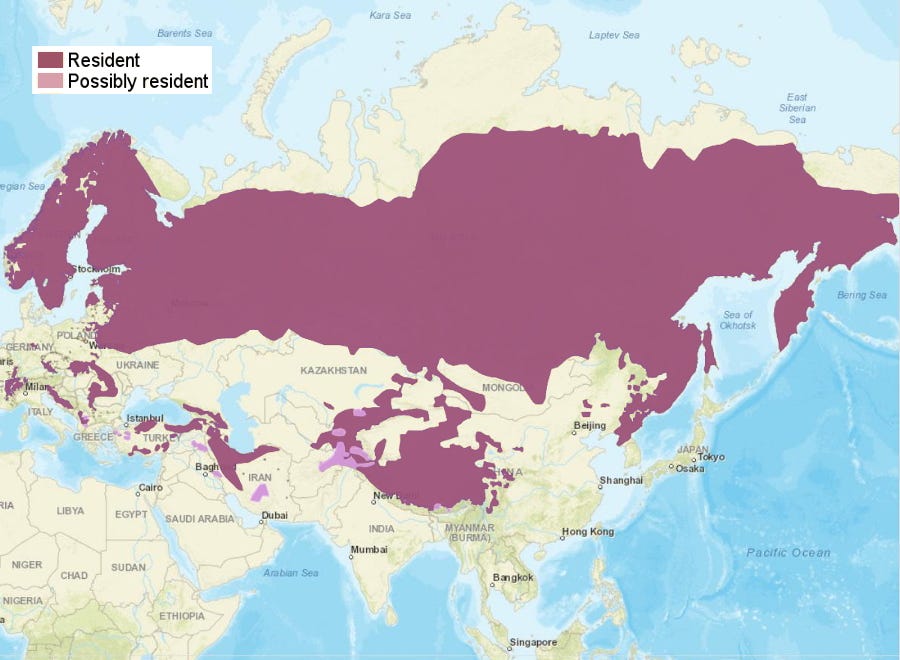
While the zoo doesn’t specify, I assume these are Eurasian lynx, one of the four extant species of lynx on the planet. Eurasian lynx can be found in a huge range from northern Europe to the Himalayas, inhabiting temperate and boreal forests. Although its range is vast, like many other forest-dwellers, it is threatened by habitat loss. They are less frequent in areas with human settlement, preferring regions with high tree cover, and their movements and prey access depend largely on interconnected forests. However, in Central Asia, they depend on rocky hills to provide cover, and in desert regions they live in mountains.
The Eurasian lynx is the largest of the lynx species, males growing from 30-42 inches in body length and females 29-39 inches, and weighing 40 to 80 pounds, size somewhat dictated by the region in which they live. They are one of the largest predator species in Europe, only brown bears and grey wolves being larger. There are six generally-recognized subspecies of Eurasian lynx, differentiated by range and possessing size and coat coloration variance.
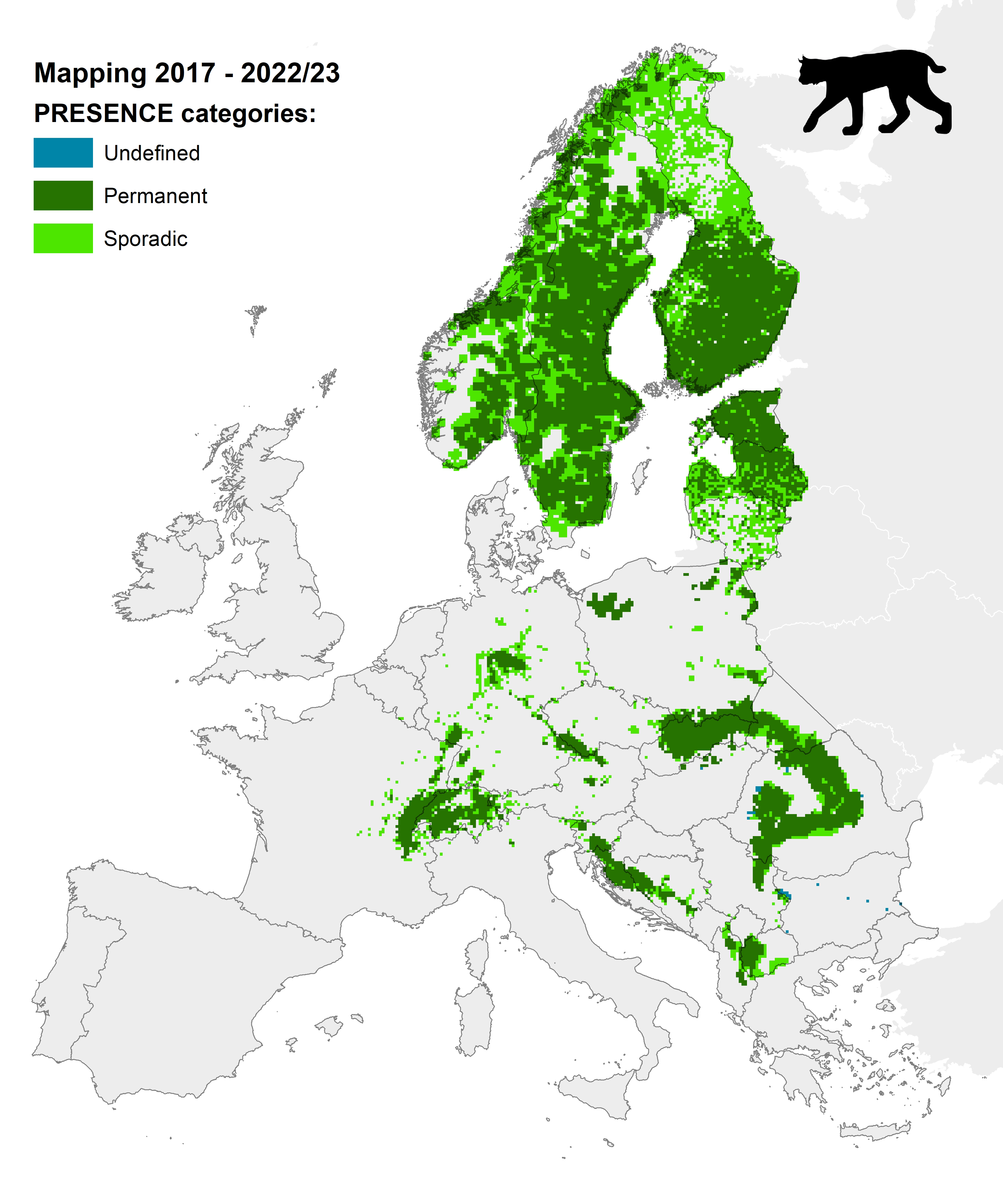
While the lynx was much more widespread throughout most of continental Europe and even into the UK, in the 18th and 19th centuries it was hunted to local extinction, both for its fur and to guard against game and livestock losses (the latter largely driven by fear more than reality). As attitudes in the 20th and 21st century have changed and the ecological benefits of large predators is better understood, some countries have re-introduced lynx into their former ranges. Efforts are still ongoing: just since 2000, Germany, Switzerland, Poland, Austria, Italy, Slovenia and Croatia have all participated in lynx re-introduction programs. Britain is investigating the possibility of re-introducing lynx into their northern forests: computer models have found that lynx released in the north of England would be able to grow into a healthy population, which would span across northern England and into southern Scotland.
Today there are about 9,400 Eurasian lynx in Europe.
The source for today’s gif is here.
Animal Diversity Web: Lynx lynx
Large Carnivore Initiative for Europe
Canny little faces... Can just see those kits getting smarter
There's that cat curiosity coming out to play. Lovely family outing. I'm glad that Europe has been reintroducing animals to the wild. There are so many advantages to the ecology if all the pieces of the puzzle are in place. Thanks, Martini!