

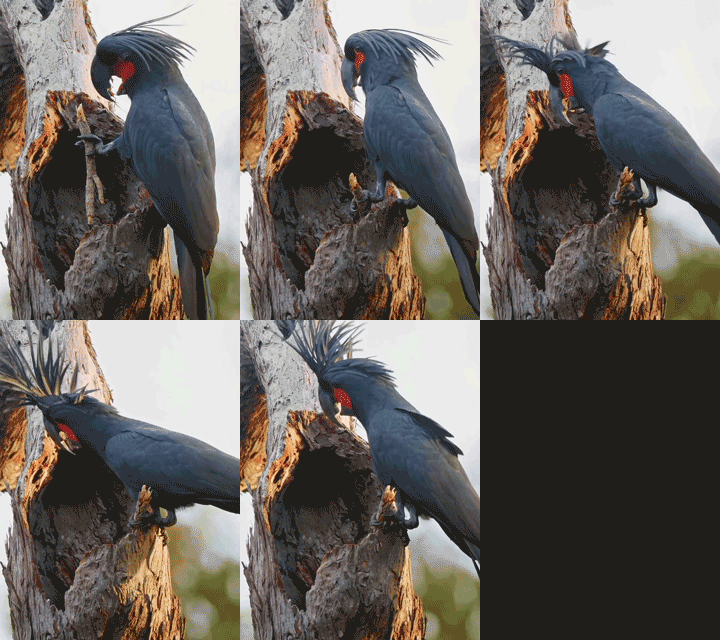
This clever bird, photographed by Jan Wegener, is a palm cockatoo. He’s exhibiting a behavior that is quite uncommon in the animal kingdom—employing a tool to attract a mate. During mating season, the males of this species select their own drumstick, choosing a large seed pod or breaking off a branch from a tree and then customizing it— stripping the bark from it and modifying its shape as desired. They’ll use the stick to tap rhythmically on trees, dead boughs or hollows in the hopes of catching the attention of a female. After the drumstick has served its percussive purpose, the bird will deposit it into a tree hollow, helping to elevate the floor of the niche, keeping it dry and protected from flooding. The palm cockatoo is thought to be the only species that craft and use tools as part of the mating process, and one of the very few species of animal that make music with tools, some types of primates being the others.
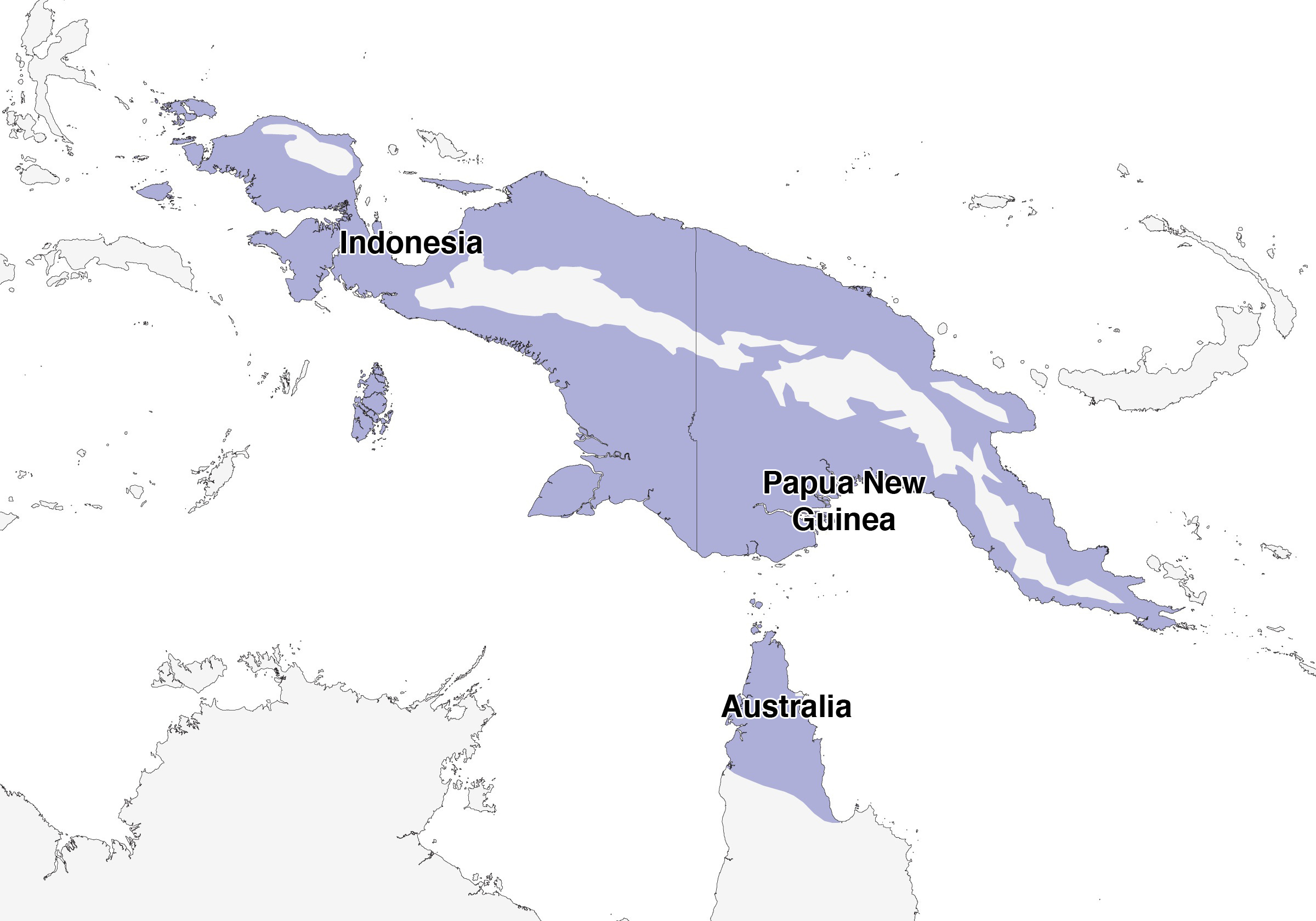
Palm cockatoos (Probosciger aterrimus) are found in the rainforests at northern tip of Australia’s Cape York Peninsula, and in the rainforests and woodlands of the island of New Guinea. They are one of the largest Australian parrots, about 22-24 inches long and weighing about 2 to 2.7 pounds. They possess one of the largest bills of any parrot, giving them the ability to break open the hard nuts and seeds that other birds can’t manage. Their beak is specialized, with a gap between upper and lower mandibles along much of its length, enabling the cockatoo to use its tongue to hold a nut in place while it works the lower mandible to open it. This makes palm cockatoos an important ecological species, the only birds that consume and distribute some of the very large seeds of their forest environment. They typically feed during the early hours of the day, preferring palm fruits and tree nuts, rounding out their specialized, mostly-arboreal diet with fruits and berries, leaf buds, and grubs and insects that they can dig out of decaying wood.
In the wild, it is estimated that palm cockatoos live to between 40 to 60 years old. Under proper care, they can live even longer in captivity. One palm cockatoo at the London Zoo lived to 56 years old, the oldest confirmed specimen under human care, but anecdotal evidence from Australian zoos suggest that they can likely live to 80 or even 90 years old.
Palm cockatoos are monogamous, pairing for life. As part of the mating ritual, the two will approach each other with their wings extended. The male will make loud whistles and bows, and the skin on his face will typically become a deep red. While I know this is me anthropomorphizing, I find it adorable, the image of a little guy flushing a bit as he tries to impress his gal. He’ll then do his drumming routine. While naturalists are not sure why this drumming ritual evolved, some speculate that the sounds help the female determine the size and suitability of a nesting hollow. Palm cockatoos can’t excavate their own nesting cavities, so they rely on finding previously hollowed nooks, which they then line with broken twigs upon which their single egg will rest. Incubation takes 30 to 33 days, and the chick will take 100 to 110 days to fledge, the longest period of fledging for any parrot species. The pair will continue to feed and care for the hatchling until fully independent, another 6 weeks or so, and the chick will stay with its parents until the next breeding season the following year.
In the last few decades, studies have found that palm cockatoos have one of the lowest breeding success rates of any bird. Females only lay one egg at most every two years, and don’t reach sexual maturity until seven or eight years old. While their numbers would typically be balanced through their longevity, researchers have found that loss of habitat coupled with egg/chick predation (largely due to insufficiently protected nesting spots) are causing rapid population decline. In 2023, the species was relisted by the IUCN as Near Threatened, in recognition of a decreasing population of mature breeding individuals. Australia relisted them from Near Threatened to Vulnerable on their national list of threatened fauna in 2015.
This BBC short gives more information about their declining population numbers.
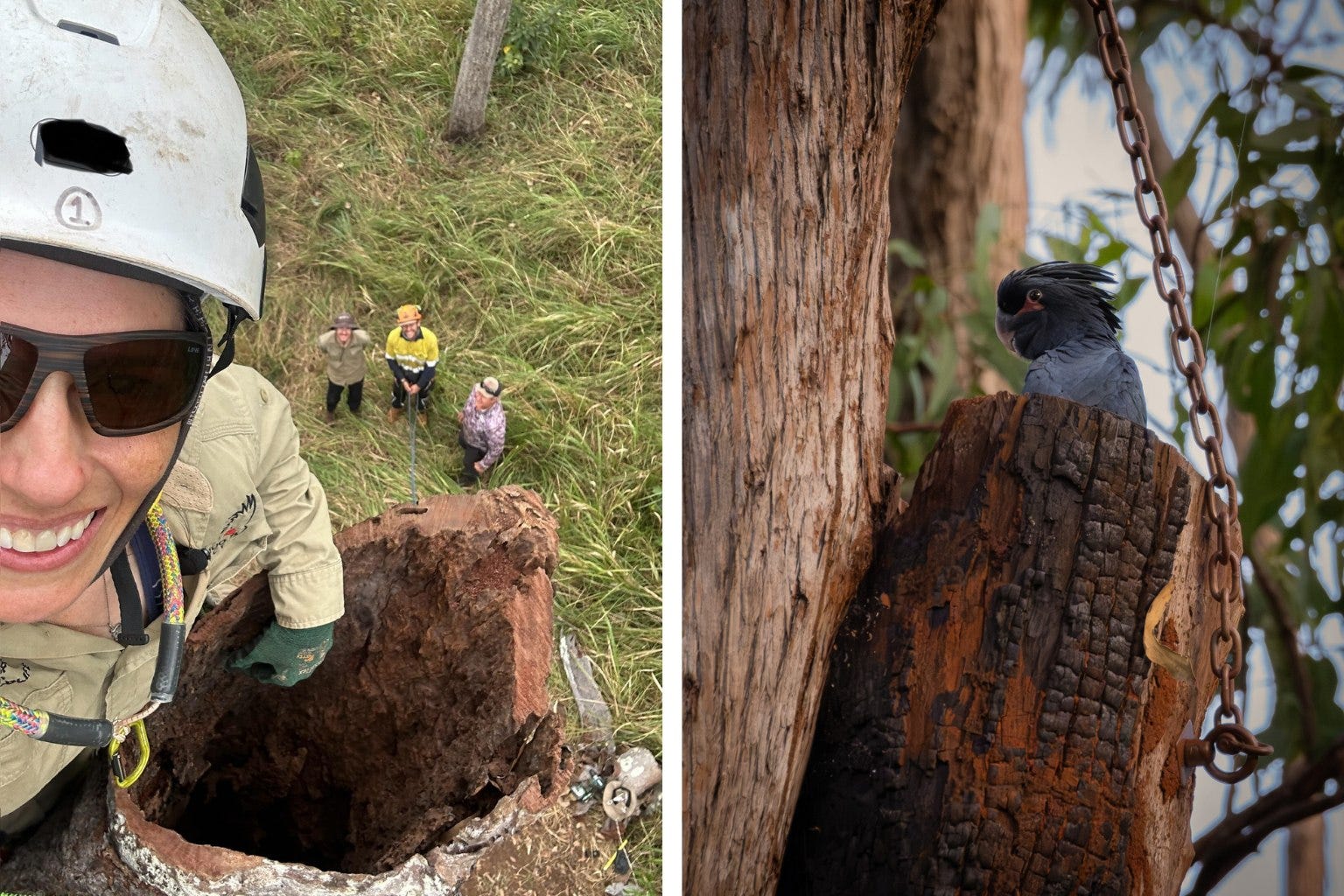
As a large bird, the palm cockatoo requires a large tree with a big hollow in which to nest. Unfortunately, many old growth trees that can accommodate these nests are being lost to wildfire and extreme weather events. Conservationists at People for Wildlife (PFW), working in conjunction with palm cockatoo expert Dr. Christina Zdenek in Australia have developed a plan to create additional suitable nests for palm cockatoos in the hopes of encouraging mating pairs. In addition to protecting suitable trees from fire by establishing fire break clearings, they are creating new artificial hollows. This is done by enlarging existing tree hollows and by creating new nesting spaces from scratch, boring holes in wide-diameter logs from fallen trees and then hoisting them into the canopy. In December of last year, they saw the first success of these efforts: a palm cockatoo chick fledged from one of their artificial log hollows.
Palm cockatoos have been a target of the illegal wildlife trade, desired as a valuable exotic pet. Enforcement efforts have stepped up to halt the illegal capture and sale of these birds, particularly in light of their declining numbers. Ozai is one such palm cockatoo that was rescued in 1988 from illegal trade. In his younger days he participated in the palm cockatoo species survival plan and is now living his best life in retirement in a Florida sanctuary. Even at his advanced age, I bet he still turns ladies’ heads, the handsome fella that he is.
The source for today’s gif is here. You’ll want to turn the sound on to hear the drumbeat.
People for Wildlife (conservation organization website)
Birds of the World: Palm Cockatoo
Animal Diversity Web: Probosciger aterrimus
Peggy’s Parrot Place: “The Black Palm Cockatoos of the Cape York Peninsula,” 11/11/19
Blushing suitors, tool makers, and musicians too? Oh yes, I'm impressed!
Hit me with your rhythm stick…🎶