
Catchin' Raindrops: The Giraffe Method
A resident of Australia's Taronga Zoo performs meteorology assessment


There are some impressive tongues out there in the animal world, and certainly one has to give giraffes their due credit. A giraffe’s purple tongue can measure up to 45 cm long (that’s almost 18 inches). Their tongue’s unusual purple color provides sun protection, an important consideration in the hot and sunny habitats in Africa that wild giraffes call home. They use these handy appendages to grasp branches and delicately pluck leaves and tender shoots from trees. Or to catch raindrops for a quick little thirst-quenching drink.
In the wild, giraffes drink water when it is available, but they don’t need to drink it on a daily basis, getting much of their moisture from vegetation. This adaptation allows them to survive in arid environments. Being ruminants, they will first chew their food and then will pass their half-digested cud back up their long necks into their mouth to chew again. They will graze 16 to 20 hours a day, but they are also quite selective about what they consume, favoring acacia tree leaves when they can find them. They generally ingest about 75 pounds of foliage during a typical grazing period, but when food is scarce, they can subsist on about 15 pounds of foliage per day. Their food selectivity allows them to eat less pound-for-pound than many other herbivores since they eat more concentrated nutrients and process it with more efficient digestive system.
To learn more about giraffes, check out some of the links at the bottom of the post. Your source for today’s gif is here:
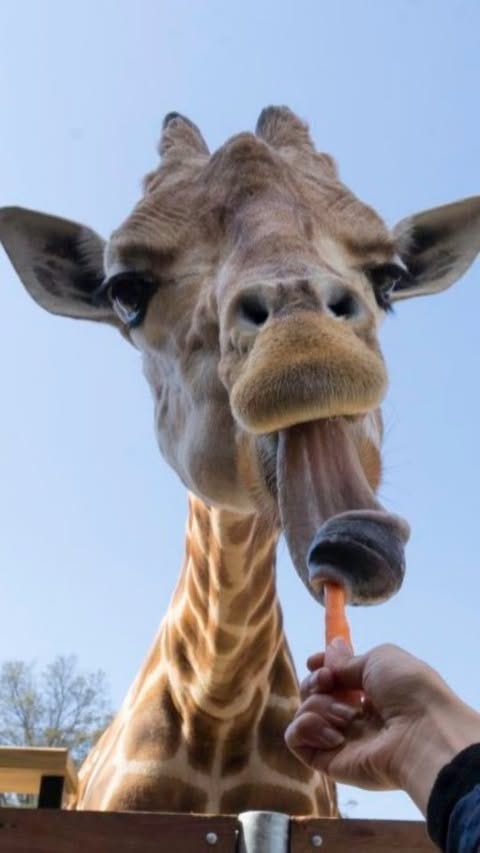
Eat them up, yum!
I think giraffes are an interesting example of evolution but more often than not I just think of the giraffes on the show The Owl House. https://www.youtube.com/watch?v=UiS6F8zR6OQ
Thanks, Martini for the fun times. Especially on election day.