

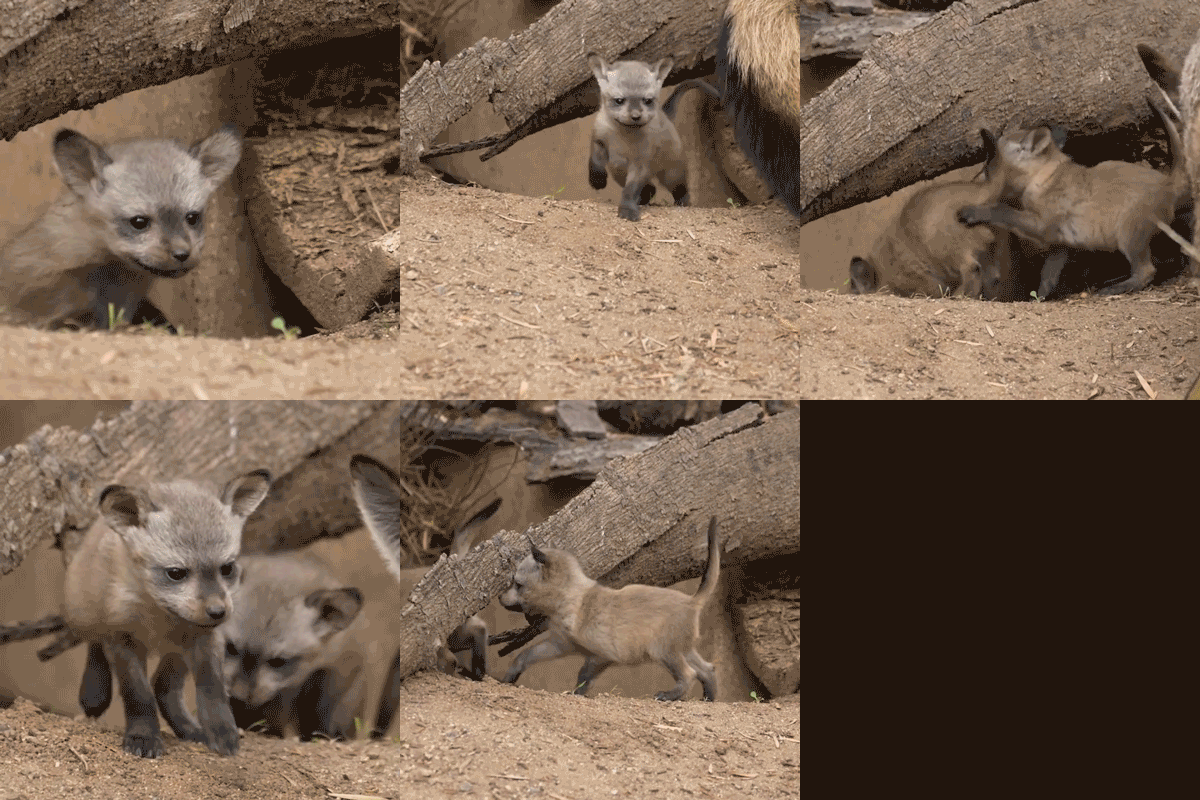
In April of this year at the San Diego Zoo, bat-eared fox Winter gave birth to three kits. After a few months of behind-the-scenes den time with mom and attentive first-time dad Teddy, the trio of rumble-tumble kits was ready to explore their outdoor habitat. And explore they did. Under Winter and Teddy’s watchful eyes, of course.
Bat-eared foxes (Otocyon megalotis) are found in the arid savannas of Africa, with one subspecies’ range in the southern tip of the continent and another in East Africa. It is not classified as a true fox, genetic and fossil evidence suggesting its clade diverged from the tribe Vulpii perhaps around three million years ago, developing some unique un-foxlike charactistics. It has evolved an unusual tooth and jaw structure for its diet and habitat, with molars that are more numerous than any other placental mammal and with teeth that are much smaller, stronger and more blunted at the root than any other species of canine. This adaptation favors rapid chewing, grinding and bite force over the shearing ability of primarily meat-eating canids.
These cuties are on the small side for members of the canine family, weighing in between 6.6 to 11.7 pounds at adulthood with a body length of 18-26 inches. But one thing they are not short on is ears. Growing to between four and five inches long, those big ears help them to thermoregulate and aid in their extra-keen hearing abilities. The only truly insectivorous canid in the world, the bat-eared fox uses those ears listening for harvester termites, its favorite meal, which constitute up to 90% of its diet. But as an opportunistic hunter, when its favorite isn’t available, it will also eat other species of termites, other arthoropods, and sometimes eggs, rodents, reptiles or fungi. It also eats berries, seeds and wild fruit. Adapted to dry environments, it meets its hydration demands through the food that it eats, with drinking water being hard to come by.
Bat-eared foxes are highly social. Depending on the subspecies, they live in monogamous pairs or groups along with their pups. They play together and groom each other, and will forage for meals as a team. Unlike most canids, the father takes on the bulk of parental care (grooming, defense, cuddling, directing and carrying the kids from den to den), allowing the mother time to forage and replenish milk supplies that will feed her youngsters. Pups start exploring solid foods at about four weeks of age and are completely weaned in eight to ten weeks, although they may continue to suckle up to 15 weeks old, a phenomenon not uncommon with social animals that maintain bonding through weaning. They are fully independent in five to six months, which is when they will head off to establish their own territories. They live to about nine years old in the wild, with some in captivity reaching 14 to 17 years old.
The source for today’s gif is below.
Earristible, 𝘦𝘢𝘳𝘳𝘪𝘴𝘵𝘪𝘣𝘭𝘦... GAAH!
And they're right. Puppies in general, but then, pups with 𝘵𝘩𝘰𝘴𝘦 ears?
Who would even try to resist?
Puppy-Kittens!